Most People Come to This Training Because Something Has Gone Quiet
What is this sound actually doing — mechanically, to attention, to the nervous system, to the subtle body?
You may have been practising asana for years. You may already teach. You may chant Om at the start and end of class without ever having been taught what you are actually doing.
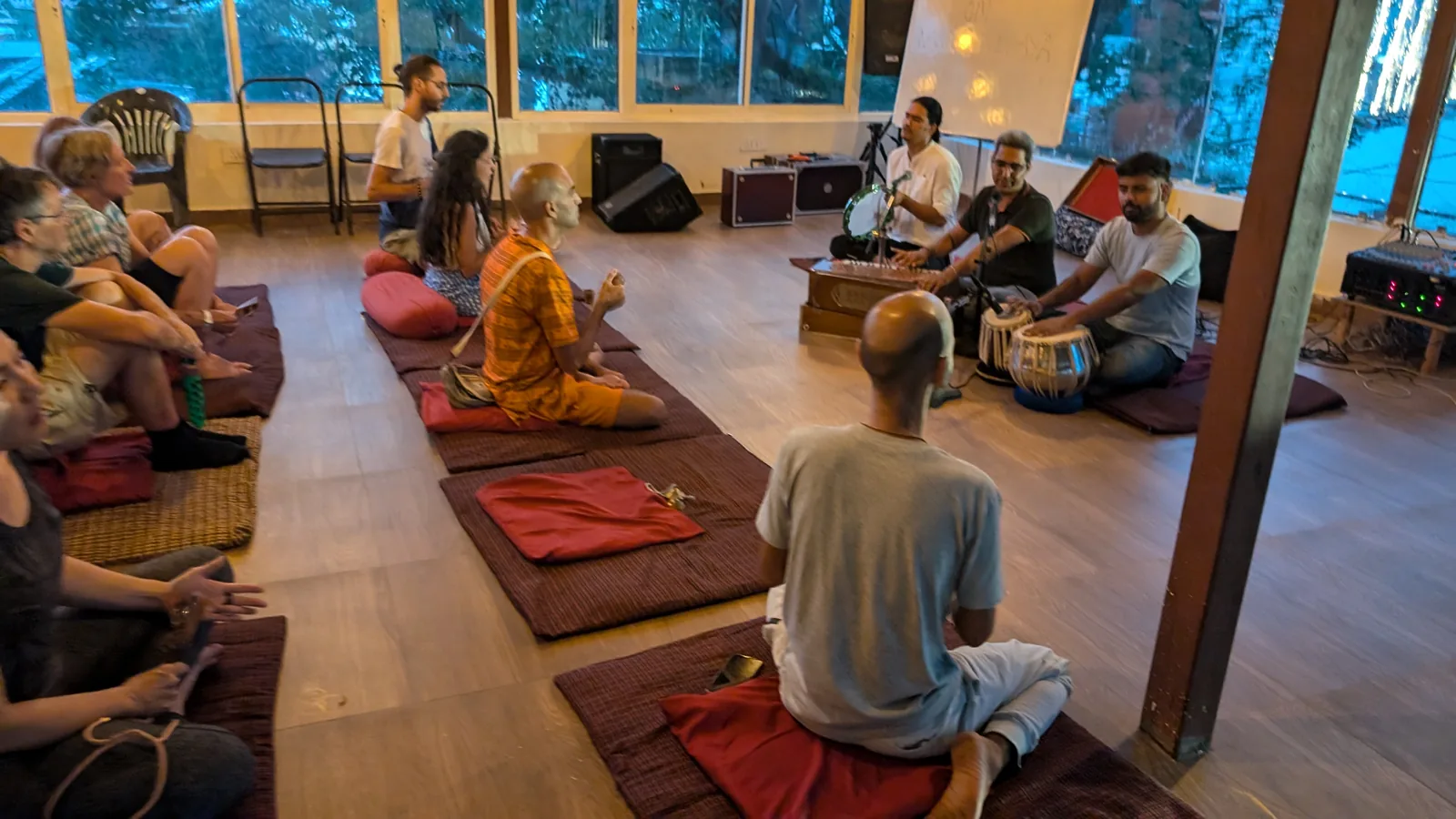
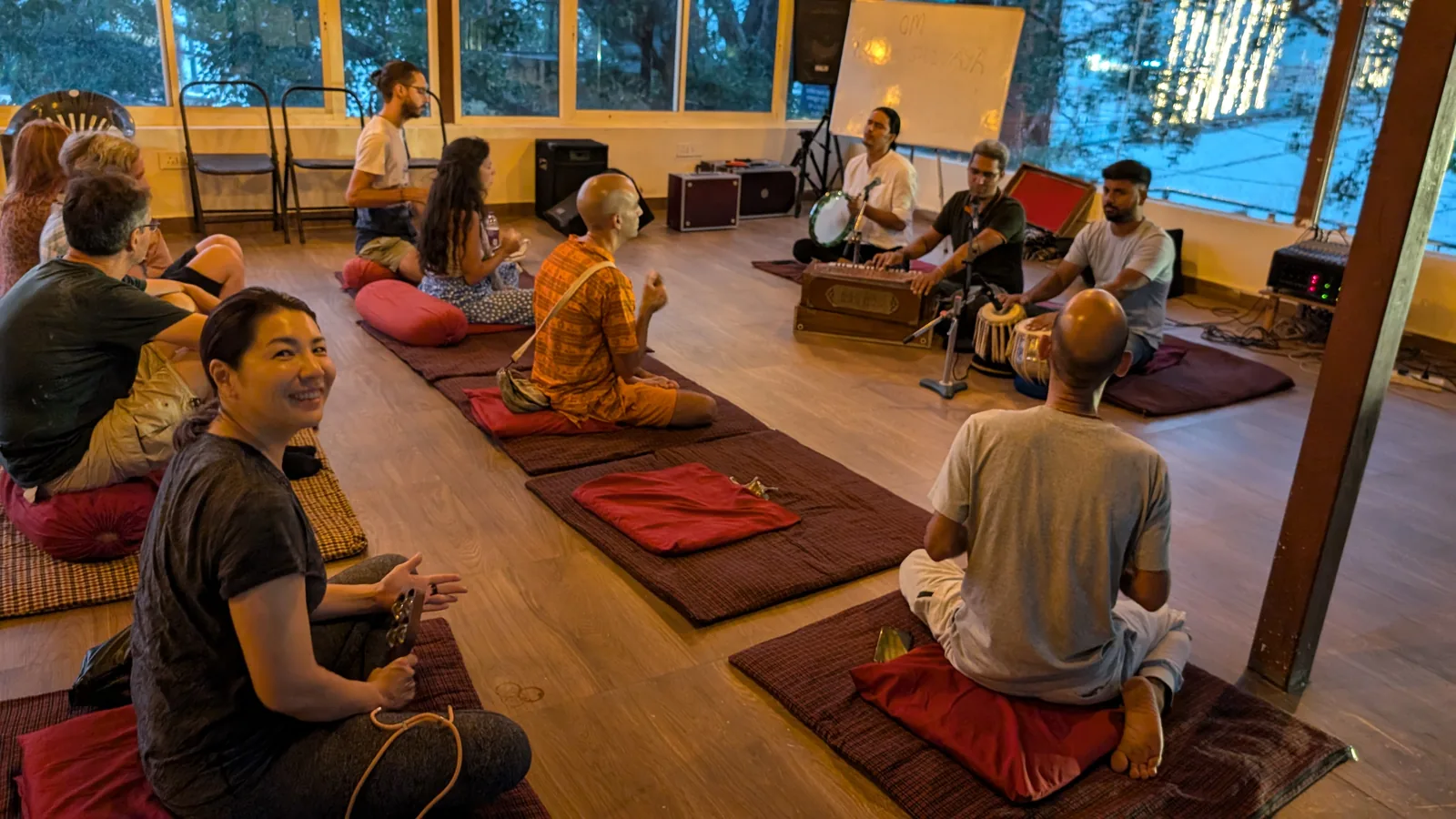
At some point a question surfaces. Not what does it mean symbolically — what is it doing? Why does a room of thirty people chanting the same syllable feel different from a room of thirty people sitting silently? Why does the tradition insist that sound is not decoration around the practice but a practice in its own right, with its own texts, its own map, and its own end point?
Nada Yoga is the answer to that question. It is not a small subject — it is one of the oldest complete methods in the yogic tradition, described in the Upanishads, mapped in the Hatha Yoga Pradipika, and preserved in India through an unbroken chain of teachers who transmitted it the only way it can be transmitted: voice to voice. This training is where you learn it properly.