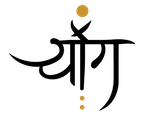
The short answer is no. They are the same syllable, written two ways.
The longer answer is more interesting, because the two spellings encode two different things — one is how the syllable sounds, the other is how the tradition analyses it — and the choice between them turns out to have real consequences for how you chant.
There is also a genuine practical difference hiding underneath the question, and almost nobody asking it knows that is what they are asking. It is not about spelling. It is about whether you sound one syllable or three.
Why Both Spellings Exist
The answer is Sanskrit phonetics, and it is unusually tidy.
In Sanskrit, the vowel o is classified as a diphthong — a compound vowel. Specifically, o is what results when a and u combine. This is not a piece of mystical numerology; it is standard grammatical description, and the same rule operates throughout the language in sandhi, the system governing how sounds change when they meet.
So a + u = o, always, as a matter of phonetic rule.
Which means:
"Om" writes the syllable as it is actually pronounced — a single sound.
"AUM" writes the syllable as it is analysed — resolved back into the components the o is made of.
Both are correct. They are the same syllable described at two different levels, in the way that "water" and "H₂O" name the same thing.
In Devanagari, the syllable has its own dedicated symbol — ॐ — as well as a spelled-out form, ओम्.
Why the Analysis Matters
If AUM is just OM written out longhand, why bother?
Because the resolution into three parts is the basis of one of the most important short texts in Indian philosophy.
The Mandukya Upanishad — twelve verses, the shortest of the principal Upanishads — is entirely about this syllable, and its argument depends on the three-part analysis.
A corresponds to jagrat, the waking state, and to consciousness turned outward toward objects.
U corresponds to svapna, the dream state, and to consciousness turned inward toward mental objects.
M corresponds to sushupti, deep sleep, where objects have ceased but awareness has not.
And then the fourth, which is the point of the whole text: turiya, "the fourth," which has no letter. It is described as amātra — without measure, without a component. It corresponds to the silence after the syllable.
The claim is that the syllable is a map of consciousness. Three sounded states and a soundless ground; three letters and the silence they resolve into.
You cannot make that argument from "Om." You need the three parts visible. That is why the AUM spelling exists and why it persists.
The Real Question: How to Pronounce It
Here is where the spelling question turns into something practical.
Vedic recitation
In traditional Vedic recitation, Om is pronounced as one syllable, not three. It is a long o followed by nasal resonance — closer to "ooohm" than to "ah-oo-mm."
It is frequently extended, sometimes given the extra-long pluta length used for calls and invocations, but its length does not turn it into separate sounds. It remains one syllable throughout.
Anyone who has heard Vedic chanting will recognise this: a long, single, resonant tone, not an articulated sequence.
Meditative chanting
The three-part chant — A opening in the belly, U rounding through the chest, M humming into the head — is a meditative and analytical practice. It is widely taught, it is genuinely valuable, and it directly enacts the Mandukya's structure in the body.
It is not, however, how the syllable is recited in Vedic contexts, and presenting it as the single correct pronunciation is inaccurate.
So which should you do?
Both, for different purposes.
Chant the three parts when the practice is meditation on the syllable itself — when you are working with the movement from gross to subtle, feeling the resonance travel from belly to chest to head, and arriving at the silence. This is the standard Nada Yoga use, and it is excellent.
Chant it as one syllable when it opens or closes a Vedic mantra — the Gayatri, the shanti mantras, anything where Om functions as part of a larger recitation rather than as the object of practice. Splitting it into three there is stylistically wrong in the same way that over-enunciating a word mid-sentence is wrong.
Knowing that both exist, and why, is what separates a teacher who has studied this from one who learned it in a studio.
What Om Is Called
The syllable has several names, and each says something.
Pranava (प्रणव) — from pra + √nu, to sound forth. The primordial sounding. This is the term Patanjali uses in Yoga Sutra 1.27, where he calls it the vācaka, the signifier, of Ishvara.
Omkara (ओंकार) — simply "the syllable Om," the Om-form.
Udgitha (उद्गीथ) — the chant, specifically the sung portion of the Sama Veda. The Chandogya Upanishad opens by instructing the student to meditate on Om as the udgitha, which places it at the origin of the entire tradition of chanting.
Taraka — that which carries across, from √tṝ, to cross over.
Where It Appears
The syllable is not the property of one tradition.
Vedic and Upanishadic: central throughout. The Mandukya, Chandogya, Taittiriya, Prashna and Katha Upanishads all treat it substantially. The Prashna Upanishad discusses meditation on one, two and three matras of the syllable and describes different results for each.
Yoga Sutras: 1.27–1.29, as above.
Buddhism: widely used in mantras across Mahayana and Vajrayana traditions, most familiarly at the opening of Om mani padme hum.
Jainism: understood as encompassing the five supreme beings, the panca-parameshthi.
Sikhism: the Guru Granth Sahib opens with Ik Onkar — "one Onkar," one supreme reality — using a related form and a distinct theological meaning.
Four traditions, one syllable, different accounts of what it means. Worth knowing before describing it as belonging to any one of them.
How to Chant It
The three-part meditative form, which is the one most readers will want:
Sit upright, spine long, eyes closed. Settle for a minute without doing anything.
Inhale fully but without strain.
Sound A — open, as in "father," from the belly. Feel the resonance low in the abdomen.
Let it round into U — as in "put." The lips gradually close, the resonance rises into the chest.
Close into M — lips together, humming. Let the resonance move into the head. Give this roughly half the exhalation.
Then stop, and do not begin again.
The silence after is not a gap between repetitions. In the Mandukya's terms it is the fourth, the amātra, and it is the part the other three exist to arrive at. Sit in it until it genuinely ends, then take the next breath.
Nine, eighteen or twenty-seven repetitions.
A note on proportion
Traditional guidance gives the M — the nasal resonance — significant length, often around half the total. Beginners typically rush it, spending most of the breath on the open vowel and closing at the last moment.
Reverse that. The hum is where the sound becomes most interior, and it is the bridge into the silence.
Common Misunderstandings
1. "Aum is the correct spelling and Om is a Westernised simplification." Neither is a corruption. O is a diphthong formed from a and u, so both spellings are accurate — one phonetic, one analytical. Om is the standard transliteration of the pronounced syllable.
2. "You must always chant three distinct sounds." In Vedic recitation Om is sounded as one long syllable. The three-part chant is a meditative practice, valuable in its own right but not the universal correct pronunciation.
3. "Om is the sound of the universe." The traditional claim is more precise: the pranava is the vācaka — the expression or signifier — of the absolute, and the Mandukya presents it as a map of the states of consciousness. "The sound the universe makes" is a modern paraphrase that loses the actual claim.
4. "Om is a Hindu symbol." It is central to Hindu tradition and also used in Buddhism and Jainism, with a related form opening the Sikh scripture. Its meaning differs across them.
5. "The silence at the end is just the end." The Mandukya treats it as the fourth and most significant element — turiya, the soundless ground. Cutting it short removes the point of the practice.
Conclusion
Om and AUM are one syllable, written at two levels of description. Nothing hangs on which you write.
What does hang on something is whether you know why the analysis exists — that the three parts map the three states of consciousness, and that the silence after them is the fourth and the reason for the other three.
And whether you know that Vedic recitation sounds it as one syllable while meditative practice separates it, and that both are correct in their own context.
Chant the three parts slowly. Give the hum its time. Then stop, and do not rush out of what follows.
That last part is not the end of the practice. According to the shortest of the Upanishads, it is the practice.
Frequently Asked Questions
What is the difference between Om and Aum?
They are the same syllable spelled two ways. In Sanskrit the vowel o is a diphthong formed from a and u, so "Om" reflects how the syllable is pronounced and "AUM" reflects how it is analysed into components. Neither spelling is a corruption of the other.
Should I pronounce Om as one sound or three?
Both, depending on context. Vedic recitation sounds it as one long syllable — closer to "ooohm." The three-part chant, with A in the belly, U in the chest and M in the head, is a meditative practice that enacts the Mandukya Upanishad's analysis and is well suited to Nada Yoga.
What do the three parts of AUM represent?
According to the Mandukya Upanishad: A is the waking state, U the dream state, and M deep sleep. The silence that follows is turiya, the fourth — described as amātra, without measure — and is treated as the most significant element.
What does pranava mean?
Pranava comes from pra + √nu, to sound forth. It is the standard term for Om in yogic literature, and Patanjali uses it in Yoga Sutra 1.27, calling it the vācaka or signifier of Ishvara.
Is Om only used in Hinduism?
No. It is central to Hindu tradition and also appears throughout Buddhist mantras, is used in Jainism to encompass the five supreme beings, and a related form — Ik Onkar — opens the Sikh Guru Granth Sahib, with its own distinct meaning.
How long should the M sound be when chanting Om?
Traditionally the nasal resonance takes a substantial portion of the exhalation, often around half. Most beginners rush it, spending the breath on the open vowel and closing late. Giving the hum its full length is where the sound becomes most interior.
How many times should I chant Om?
Nine, eighteen or twenty-seven repetitions suit most daily practice. What matters more than the count is resting fully in the silence after each repetition rather than moving straight to the next breath.
Learn the Syllable Properly
Om is the first thing anyone learns and one of the last things anyone learns well. The proportions, the placement of resonance, the difference between the recited form and the meditative form, and the discipline of not rushing the silence — these take a teacher and repetition, not an article.
The Nada Yoga Teacher Training is a four-week immersion in Rishikesh, run by Rohit Yoga Academy in collaboration with Nada Yoga School. Mantra and Sanskrit pronunciation are treated as a core discipline, alongside chanting and kirtan, sound and the subtle body, the textual tradition including the Mandukya, work with tanpura, harmonium and singing bowls, and the meditative practices of nada — with lineage-trained Indian teachers, in small groups.
It is a Yoga Alliance registered 200-hour training, so graduates can register as an RYT 200 — but with the whole month given to the yoga of sound rather than divided across six general subjects.